Faced with a treatment menu of eight or nine different massage styles, plenty of guests default to whatever's listed first. That's a shame, because each style genuinely does something different — matching the treatment to what you actually need makes a real difference to how you feel afterward. Here's a straightforward way to think about it.
Traditional Thai massage — for full-body reset
If you're not sore anywhere in particular but feel generally stiff, tired or "tight everywhere," this is usually the right starting point. Performed clothed, without oil, combining firm rhythmic pressure with assisted stretching along the body's sen lines, it works the whole body rather than targeting a single problem area. It's also the best choice if you've never had a professional massage before — it's a genuinely different, often gentler introduction than guests expect.
Deep tissue — for specific, stubborn tension
If you know exactly where the problem is — a knot between your shoulder blades from hours at a desk, chronically tight hips from running or cycling — deep tissue massage is built for that. Using firmer, more sustained pressure focused on specific muscle groups, it targets deeper layers of muscle and connective tissue than a relaxation massage would. It can feel intense in the moment and mild soreness the following day is normal, similar to how you'd feel after a hard workout. Tell your therapist clearly where it hurts and how much pressure feels right — this style should never cross into pain that makes you tense up rather than relax.
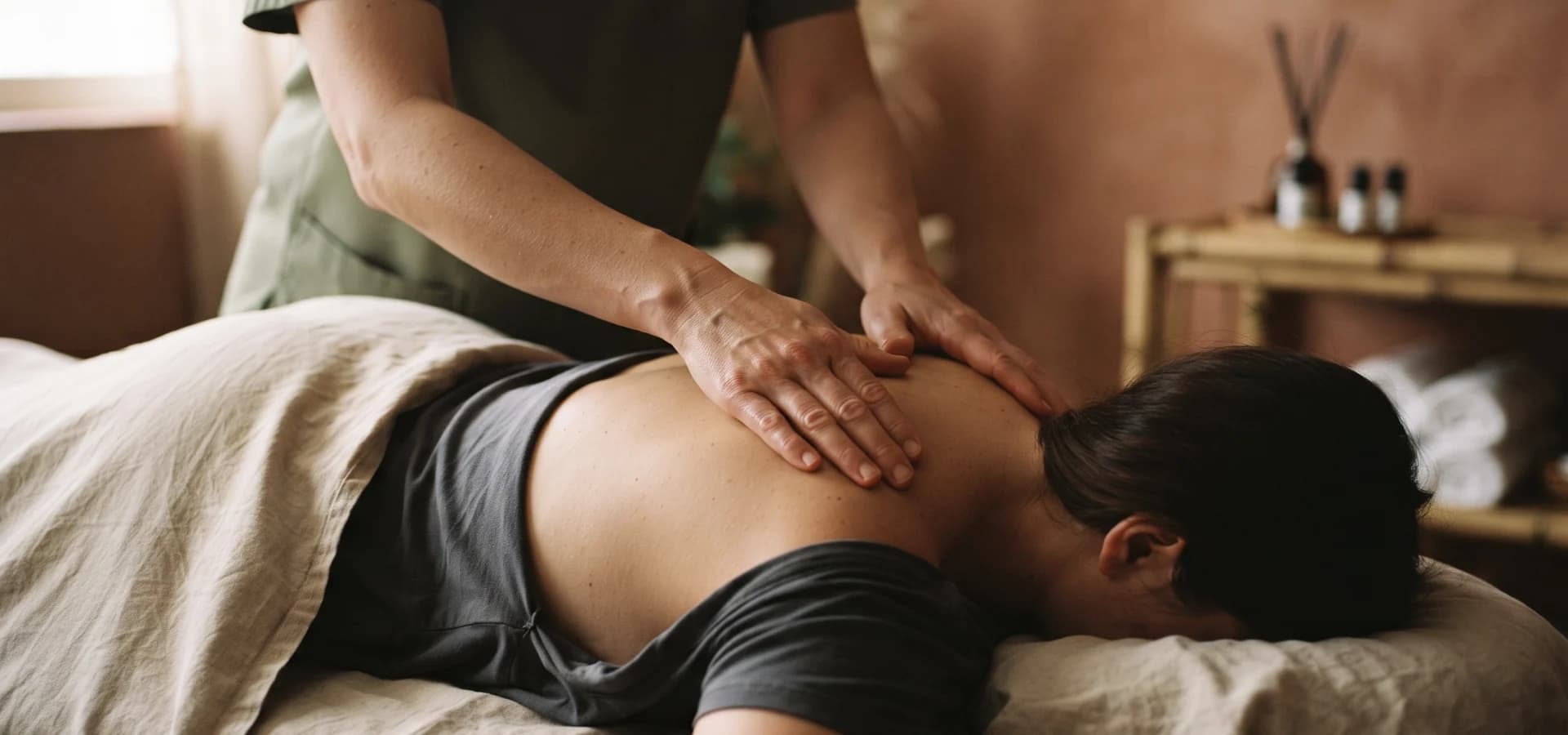
Aromatherapy massage — for stress and sleep
When the goal is calming your nervous system rather than working out physical knots, aromatherapy massage — gentler, oil-based, built around essential oils chosen for their scent and effect — is usually the better fit. It's a good choice after a stressful stretch of travel, before an evening you want to properly unwind, or simply when what you need is calm rather than intensity. The pressure is lighter throughout, with longer, more flowing strokes than Thai or deep tissue work.
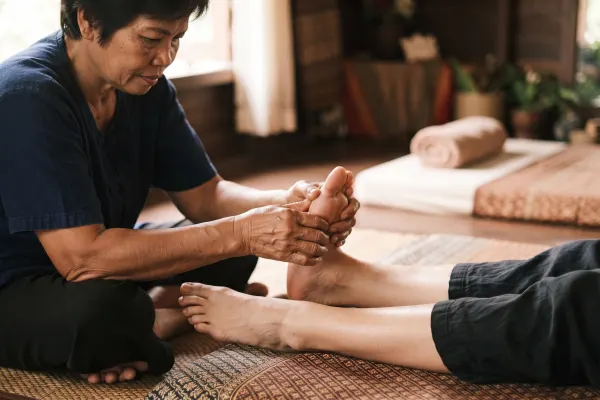
Foot reflexology — for tired feet and a shorter session
After a day of walking, sightseeing or flights, reflexology focuses entirely on the feet, using pressure-point technique based on the idea that different areas of the foot correspond to different parts of the body. It's shorter than a full-body treatment, doesn't require undressing, and is a genuinely good option if you want real benefit without committing to a full ninety-minute session.
Still not sure? Ask us.
If none of the above feels like an obvious match — or if you're dealing with a specific injury, are pregnant, or have a health condition that might affect what's appropriate — the honest answer is to tell our team when you book, or ask on arrival. A good therapist would always rather adjust the treatment to what your body actually needs than have you sit through the wrong one.