Long before "wellness" became a word on hotel brochures, Thai massage was already centuries old. Its roots trace back more than two thousand years, to a blend of traditional Indian Ayurvedic medicine, Chinese meridian theory, and indigenous Thai healing practice, carried into Siam along trade and pilgrimage routes and refined over generations of temple medicine. The oldest surviving texts on the practice are inscribed on stone tablets at Wat Pho in Bangkok, still one of the country's most respected teaching temples for traditional massage today.
A different starting point than Western massage
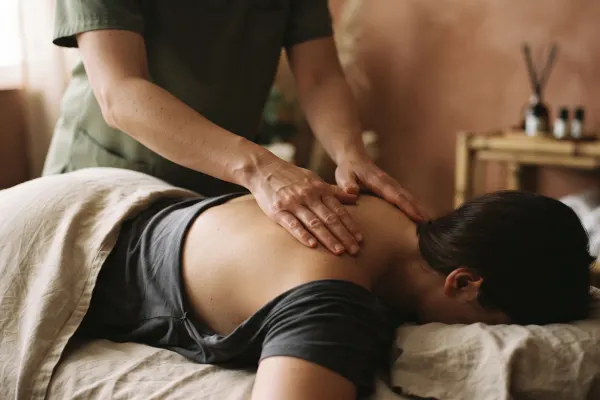
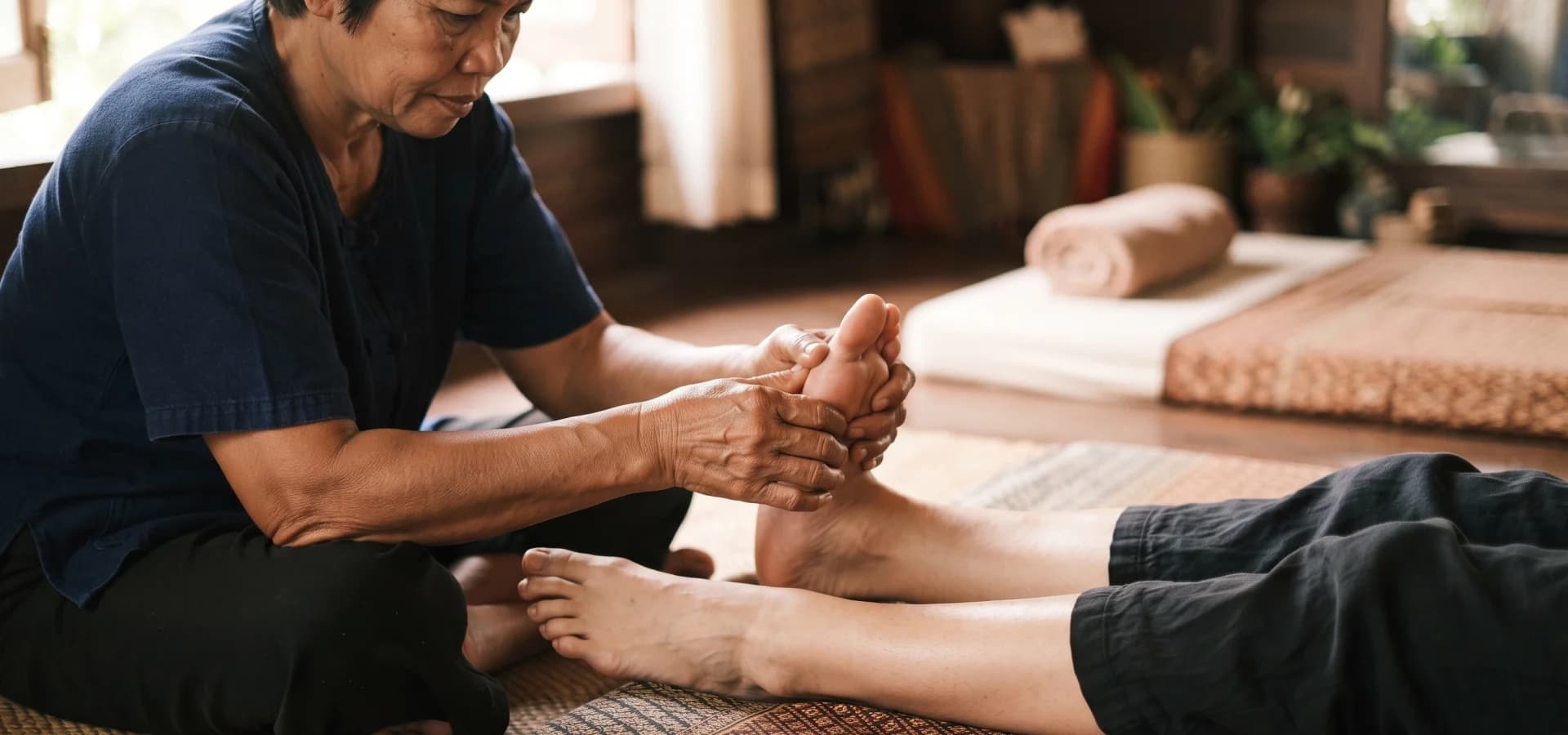
Most guests who grew up with Swedish or deep tissue massage expect long gliding strokes and lotion-slicked hands. Thai massage works differently. There is no oil, guests stay clothed in loose, breathable clothing, and the therapist uses their palms, thumbs, forearms, knees and feet to apply rhythmic, sustained pressure — often combined with gentle assisted stretching that draws comparisons to yoga performed on you rather than by you. It can look intense from the outside. Done well, it feels like a slow, deliberate conversation between the therapist's hands and your body's own tension.
What are the sen lines?
Central to the practice is the idea of sen — invisible energy pathways said to run through the body, conceptually related to the meridians of Chinese medicine or the nadis of Indian yogic tradition. Traditional Thai medicine describes seventy-two thousand sen in total, though practical massage training usually focuses on ten principal lines that run along the arms, legs, torso and spine. A therapist trained in Thai massage doesn't work muscle group by muscle group the way a Western-trained therapist might; they work sen line by sen line, applying steady pressure along each pathway to encourage a sense of ease and free movement through the whole body, not just the sore spot you mentioned at check-in.
Whether or not you think about the sen lines in energetic terms, there's a very physical logic underneath the tradition: sustained pressure along a long line of the body, followed by an assisted stretch, tends to release tension more thoroughly than a spot treatment ever could. It's one reason guests often say a Thai massage leaves them feeling loose in a way that outlasts the treatment itself.
What to expect during a session
A typical session moves from the feet upward — a nod to the belief that circulation and energy should be encouraged to flow toward the heart — through the legs, hips, back, arms, shoulders and neck, usually finishing with gentle work on the head and face. Expect your therapist to move you: bending a knee, rotating a hip, easing an arm overhead. None of it should ever be painful. Good communication matters here more than in almost any other treatment — if pressure feels too strong or a stretch too deep, say so. A skilled therapist adjusts instantly and without ego.
Why we lead with it
At Baan Sabai, traditional Thai massage is our most requested treatment, and for good reason: it's the clearest expression of what this practice has always been about — not indulgence for its own sake, but a very old, very deliberate technology for helping the body let go. If it's your first time, tell your therapist before you begin. They'll adjust pressure and pace so the two-thousand-year-old tradition feels exactly right for you, today.